
EMC Autumn Meeting 2026 | London, United Kingdom | 2nd – 5th October 2026
In what ways does our Methodist and Wesleyan heritage help us to respond to the challenges of the present? This question was at the heart of the European Methodist Council (EMC) Autumn Meeting, which brought together church leaders and representatives from Methodist, Wesleyan, United and Uniting churches across Europe for four days of worship, historical reflection and theological dialogue under the theme “Social Justice”.
The Gathering invited participants to look beyond a celebration of Methodist history and engage critically with its complexities, particularly the Church’s relationship with the transatlantic trade in enslaved people and the enduring legacy of racism. It was an opportunity to consider what justice, reparation and a credible Christian witness might mean in contemporary European society.
Revisiting Methodist Heritage through the Lens of Justice
A visit to the New Room and Charles Wesley’s House in Bristol offered an opportunity to explore the beginnings of Methodism against the backdrop of eighteenth-century Britain and its involvement in the transatlantic trade in enslaved people. While the Methodist movement is remembered for its concern for social justice, the visits also encouraged a closer examination of the historical circumstances in which it emerged, including aspects of its heritage that are less frequently discussed.
The Revd Dr Martin Wellings, Chair of the Heritage Committee, contributed to the subsequent reflections in London, as the Council considered the significance of this history and the questions it continues to raise for the Church.
Confronting Racism in Contemporary Europe
At Wesley’s Chapel in London, theologian Professor Anthony Reddie brought these historical reflections into sharp contemporary focus through a lecture examining the resurgence of racism and its appropriation of Christian identity. Drawing on liberation theology, he challenged participants to consider how Christian language, symbols and beliefs can be used to legitimise exclusion and prejudice, even when such attitudes contradict the Gospel's affirmation of human dignity.
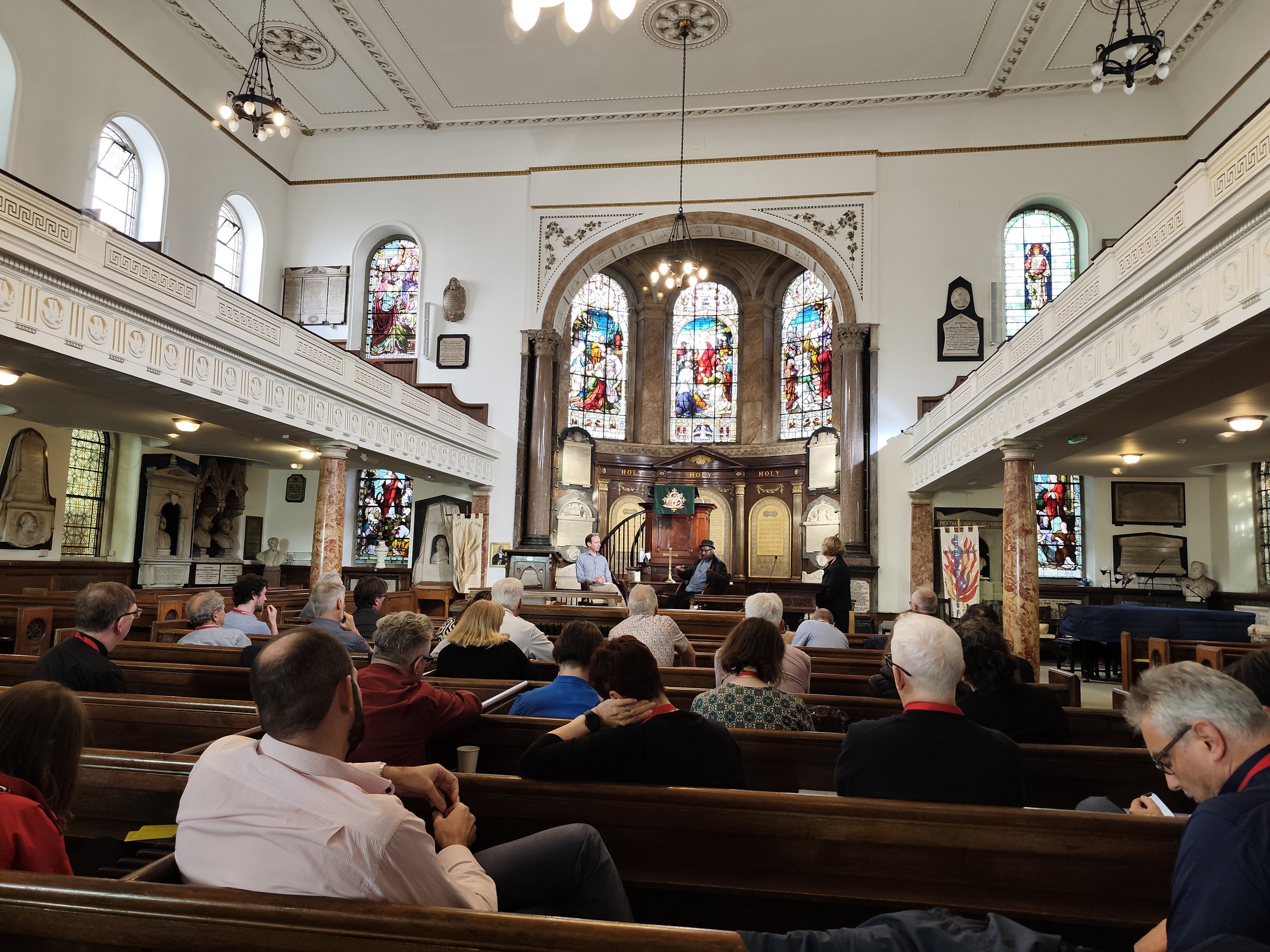
A subsequent panel discussion with Simeon Mitchell, Team Leader of the Joint Public Issues Team (JPIT), explored the ways racism continues to manifest itself in Britain and across Europe, including the troubling use of Christian identity to reinforce discriminatory narratives.
Together, these conversations raised a pressing question for European Methodism: How can the Church proclaim the dignity of every person while confronting the ways in which faith itself can be misused to justify discrimination? The challenge extends beyond speaking against racism to examining how Christian communities understand and embody the values they profess.
Faith Expressed through Witness and Action
Worship and prayer remained central throughout the gathering, beginning with an opening Communion service at Methodist Church House and continuing with Sunday worship at Wesley’s Chapel. These moments of shared faith grounded the Council’s reflections in the Christian calling to love, justice and reconciliation.
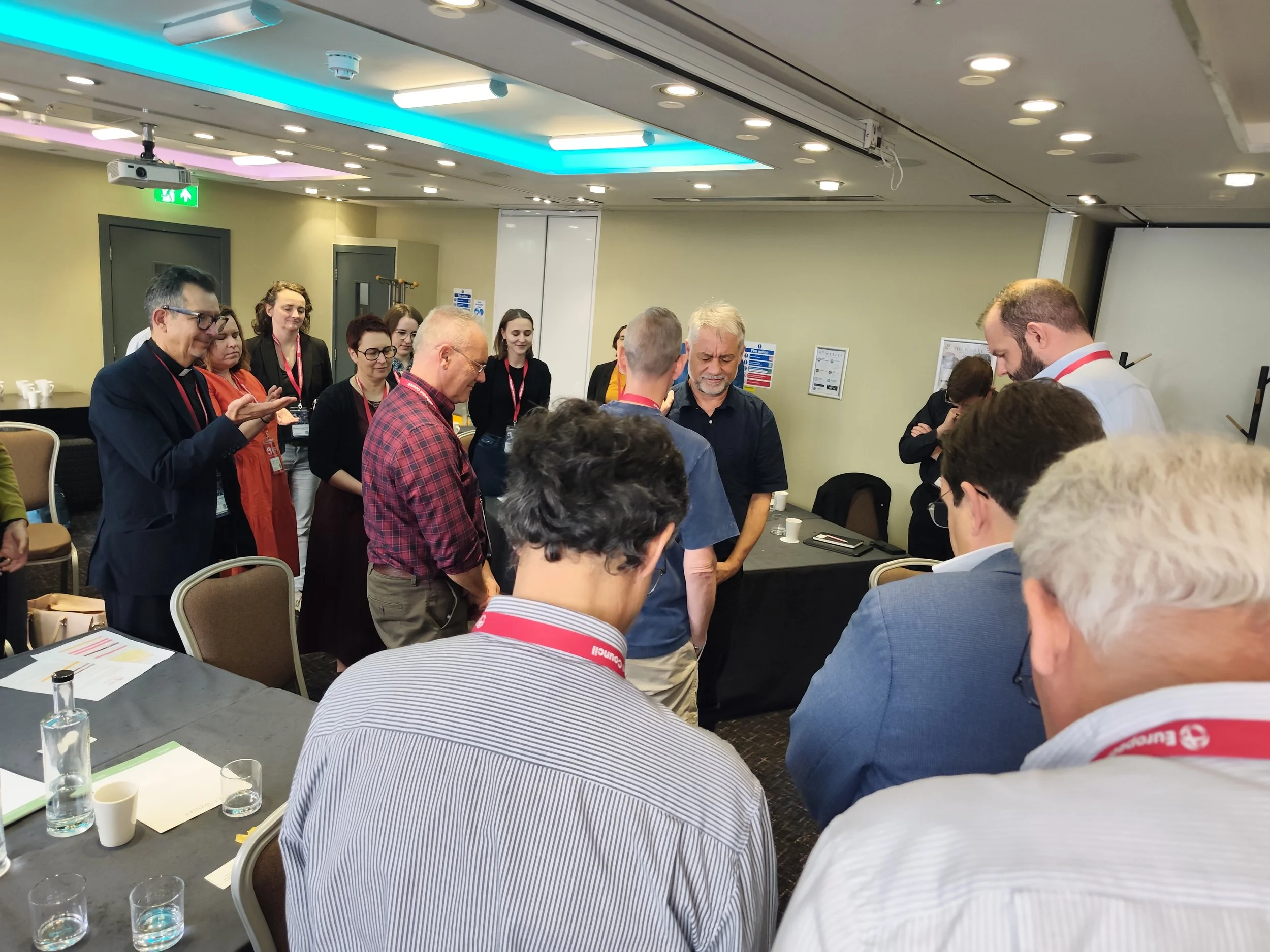
The meeting also marked an important transition in the Council’s leadership. Bishop Stefan Zürcher, of The United Methodist Church in Central and Southern Europe Regional Conference, succeeds Doug Godfrey-Swanney, of the Methodist Church in Britain as EMC Co-Chair, serving alongside the Revd. Dr. Heather Morris, of the Methodist Church in Ireland.
The Council expressed its gratitude to Doug Godfrey-Swanney for his seven years of dedicated service as Co-Chair, during which he helped strengthen relationships and cooperation among Methodist churches across Europe. He continues to serve the EMC in his new capacity as Treasurer.
The Council also welcomed the Revd. Marta López Ballalta, of the Spanish Evangelical Church (Iglesia Evangélica Española), as a new member of the Executive Committee, further enriching the representation of Methodist and Wesleyan traditions within its leadership.
Alongside the thematic programme, the Council held its regular business sessions, providing opportunities for consultation, strengthening relationships among member churches and advancing their shared work across Europe.
Among the guests attending the meeting were Bishop Ruben Saenz, Jr., President of the Council of Bishops of The United Methodist Church, and the Revd Alexander von Wascinski, Global Ministries’ Regional Representative in Europe, succeeding the Revd Dr Üllas Tankler.
Their presence offered an opportunity to strengthen connections and foster continued cooperation with the wider Methodist and Wesleyan family.
The EMC extended its heartfelt thanks to the Revd Dr Jonathan Hustler, Secretary of the Methodist Conference, and the Methodist Church in Britain, particularly its Connexional Team, for their generous support in hosting and organising the meeting. Appreciation was also expressed to The Wesley Hotel for its warm hospitality and attentive coordination, which helped make the gathering a welcoming and fruitful occasion.
As the meeting drew to a close, the reflections in Bristol and London offered a reminder that Methodist heritage is not simply a history to be preserved, but a living tradition that continues to challenge the Church. Engaging honestly with the past and confronting injustice in the present are inseparable from its calling to bear witness to the Gospel.
For the European Methodist Council, the conversations affirmed the continuing relevance of the Methodist commitment to social holiness: a faith that finds expression not only in worship and proclamation, but also in the pursuit of justice, reconciliation and the dignity of every human being.
(Photo credits: EMC/Gabuyo)
For further information:
European Methodist Council
office@methodist.eu
www.methodist.eu